A Jet Lag-Smarter Flight Routine (With Red Light)
Melissa Zahorujko
Nothing kills holiday excitement quite like the drag of jet lag.
That tired, foggy feeling we all know too well is basically your internal circadian clock staying synced to “old time” while your destination is running a new light and meal schedule.1 And if you’re heading east, it tends to hit harder. Your circadian system is wired to delay more easily than it advances, so flying against the sun is always the tougher direction.1
So, how do you nudge your clock back on track when the jet lag hits? It starts with light and a few biohacking basics worth throwing in your carry-on.
How light affects jet lag
Even on a travel day, this is one of the easiest things to optimise. It’s one of the most accessible biohacks there is.
Your circadian system is obsessed with light, especially the blue and blue-green wavelengths your eyes use to read “daytime”.1 At night, that same light can suppress melatonin and delay sleep timing.2 So the goal (especially on travel days) is simple: dim it down, darken it up.
This is also why blue light filtering lenses are a smart biohacking tool in bright environments, since they have been shown to reduce melatonin suppression during light exposure.3
Your carry-on “sleep kit” (yes, bring it on the plane)
Can you use red light therapy on a plane? The answer is yes, you can. Just be considerate of your neighbours and check your airline’s policy on personal devices before you fly.
If it fits in your carry-on, the cabin becomes your recovery room. Mid-flight is actually the ideal window as your body is in limbo between time zones, and there’s nothing else competing for your attention. That dead time in the air is exactly when your circadian clock could use the most support and when a few simple biohacking tools can do a lot of the heavy lifting.
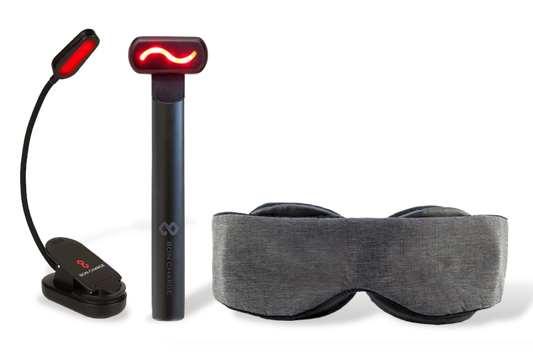
These are must-have BON CHARGE pieces you can use in the cabin, not just after you land:
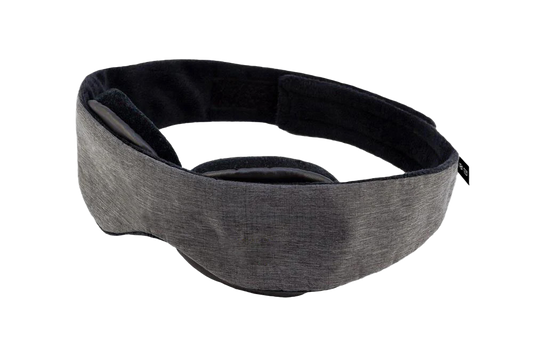
- Classic Blackout Sleep Mask: helps block ambient cabin light so switching off feels easier in-flight (and for arrival-day naps).1
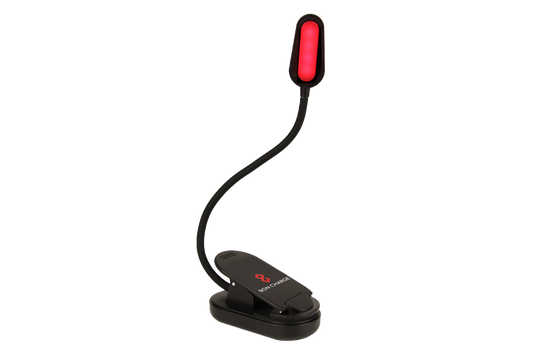
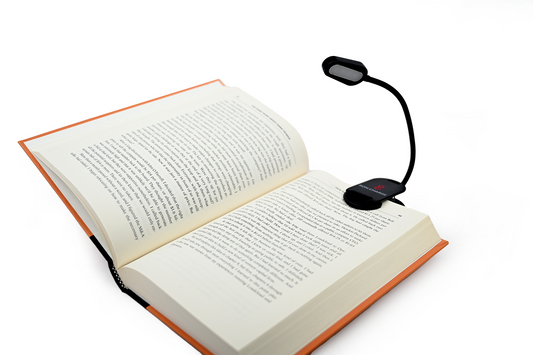
- Blue Light Blocking Clip Light: gives you gentle light for seat-area and hotel navigation without overstimulating yourself with harsh overhead lighting.1
- Red Light Face Wand: lets you get a red light session in while you’re just sitting there, hand-held melatonin-friendly red light to help support your circadian reset mid-flight so you land a step ahead of the jet lag. One of the easiest in-flight biohacks you can do.
- Travel Wellness Bundle: combines the Classic Blackout Sleep Mask, Blue Light-Blocking Clip Light and Red Light Face Wand into a single travel-smart package.
- Blue Light Blocking Glasses: blocks disruptive blue light from screens and cabin overhead lighting to support better sleep in-flight.
The travel plan (direction still matters)
The same tools can help, but the timing changes depending on where you’re headed.1 Getting that timing right is where the biohacking actually pays off.
If you’re flying east
Your goal is to help your body accept an earlier bedtime.
- In-cabin and first evenings at destination: prioritise darkness for sleep (mask on), and keep lighting low when you’re up.1
- Morning at destination: get bright morning light (skip “dark-mode” tools) to help you shift earlier.1
If you’re flying west
You’re usually aiming to stay up later and sleep later.
- In-cabin: use the mask when it’s your sleep window, but don’t force an early bedtime if you plan on going to bed on arrival.1
- Early morning at destination: only keep things dim if early light is pulling you earlier than you want.1
Pair your in-flight biohacking routine with destination-timed meals, daylight, and movement.1 The goal is landing more rested, so you can feel more energised on arrival and in the days after.1,2
This goes beyond jet lag
These are the kinds of simple biohacking wins BON CHARGE is built for, especially when life gets bright and noisy.
Modern life has a habit of blurring the signals your body actually runs on. There’s bright light at the wrong time, screens when you should be winding down and sleep spaces that are never fully dark. BON CHARGE is designed with those simple cues in mind, encouraging more darkness when you need sleep, gentler light when you need to move around during the night and an environment that helps you feel more like yourself (even when travelling).
BON CHARGE: This content is for general education and is not medical advice. Our products are not intended to diagnose, treat, cure, or prevent any disease. Individual results may vary. For personalised advice (including for sleep disorders), consult a qualified healthcare professional. Use products as directed and consider your individual light sensitivity and travel schedule.
References
- Ahmed, O., Ibrahiam, A.T., Al-Qassab, Z.M., Kannan, V., Ullah, N., Geddada, S. & Nassar, S.T. Unraveling the impact of travel on circadian rhythm and crafting optimal management approaches: a systematic review. Cureus 16, e71316 (2024).
- Hester, L., Dang, D., Barker, C.J., Heath, M., Mesiya, S., Tienabeso, T. & Watson, K. Evening wear of blue-blocking glasses for sleep and mood disorders: a systematic review. Chronobiol. Int. 38, 1375–1383 (2021).
- Sasseville, A., Paquet, N., Sévigny, J. & Hébert, M. Blue blocker glasses impede the capacity of bright light to suppress melatonin production. J. Pineal Res. 41, 73–78 (2006).